Summary
Sustainability is becoming a defining factor in Dubai’s real estate market. Driven by government policy, urban planning strategies, and shifting buyer expectations, sustainable homes are no longer a niche offering but a growing standard across residential communities. For buyers, understanding how sustainability impacts construction quality, operating costs, lifestyle, and long-term value is essential when making informed property decisions in Dubai’s evolving market.
Why Sustainability Is Reshaping Dubai Real Estate
Dubai’s real estate market has entered a phase where long-term livability and efficiency are as important as location and design. Sustainability is now closely tied to how communities are planned, how buildings are constructed, and how residents live day to day.
This shift is supported by national strategies focused on environmental responsibility and quality of life. According to the UAE Government Portal, sustainability is a core pillar of urban development and housing policy.
As a result, sustainable homes are increasingly prioritized by both developers and buyers seeking long-term stability rather than short-term appeal.
What Defines Sustainable Homes in Dubai
In the Dubai context, sustainability goes beyond solar panels or green branding. Sustainable homes are designed to reduce resource consumption while maintaining comfort, durability, and livability.
Key characteristics typically include:
- Energy-efficient building materials
- Optimized insulation and ventilation
- Water-saving fixtures and systems
- Smart energy and lighting management
- Community-level planning that reduces car dependency
Dubai Municipality outlines green building requirements and environmental standards through its planning and development framework.
These standards ensure sustainability is embedded at both the building and neighborhood level.
Government Regulations Supporting Sustainable Development
Sustainability in Dubai real estate is not optional. It is reinforced by regulation and planning policy.
Dubai’s green building regulations require new developments to comply with environmental performance benchmarks, including energy efficiency and water conservation. These guidelines are administered under Dubai Municipality’s building regulations.
For buyers, this regulatory environment provides confidence that sustainability claims are backed by enforceable standards rather than marketing language.
The Role of Urban Planning and Community Design

Sustainable homes function best within well-planned communities. Dubai’s long-term urban strategy emphasizes integrated neighborhoods where housing, services, and mobility are aligned.
The Dubai 2040 Urban Master Plan focuses on:
- Compact, connected communities
- Increased green and recreational spaces
- Reduced environmental footprint
- Improved access to daily services
This strategy is detailed by the UAE Government Portal.
For buyers, this means sustainability is not limited to individual units, but embedded across entire residential environments.
Lifestyle Benefits of Sustainable Homes
One of the most tangible advantages of sustainable homes is improved day-to-day living.
Residents typically experience:
- Lower energy and water bills
- More stable indoor temperatures
- Better air quality
- Quieter, more comfortable living spaces
These benefits translate directly into quality of life, particularly for families and long-term residents. Over time, reduced operating costs also improve affordability, making sustainable homes financially attractive beyond their environmental impact.
Architecture and Materials in Sustainable Housing
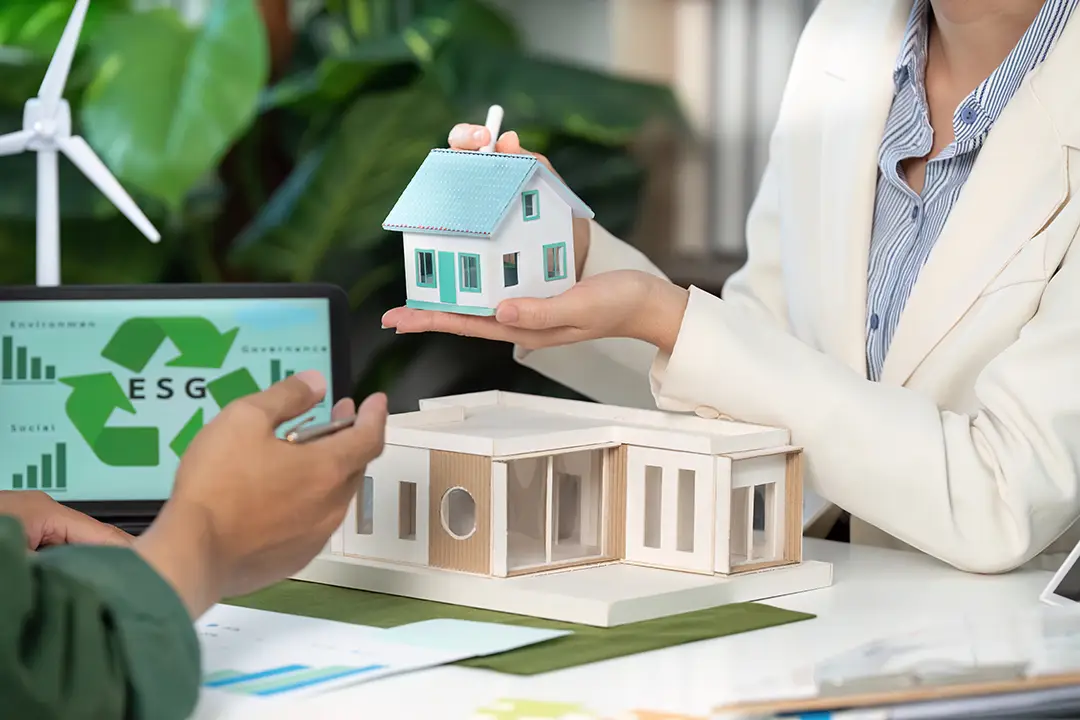
Sustainable architecture in Dubai emphasizes efficiency and durability rather than purely aesthetic features.
Common design principles include:
- Shading elements to reduce heat gain
- Orientation that maximizes natural light
- Durable materials suited to the local climate
- Efficient use of space to reduce energy demand
These architectural decisions extend the lifespan of buildings and reduce long-term maintenance costs, which benefits both homeowners and investors.
Sustainability and Long-Term Property Value
From an investment perspective, sustainable homes are increasingly viewed as lower-risk assets.
Key reasons include:
- Growing buyer preference for efficient homes
- Lower long-term operating costs
- Stronger alignment with government planning
- Higher appeal to long-term residents
According to the UAE Ministry of Economy, sustainable development is a key component of the country’s long-term economic strategy.
Properties aligned with national sustainability goals are more likely to retain relevance and demand over time.
Buyer Considerations When Evaluating Sustainable Homes
Not all sustainability claims carry equal weight. Buyers should evaluate both the home and the surrounding community.
Important factors to assess:
- Compliance with Dubai green building regulations
- Energy and water efficiency features
- Community planning and infrastructure
- Access to public transport and services
- Long-term maintenance strategy
Sustainability as a Long-Term Market Trend
Sustainability in Dubai real estate is not a temporary trend. It is tied to population growth, infrastructure investment, and long-term residency planning.
Dubai’s population growth data published by Dubai Statistics Center reinforces the need for housing that is efficient, livable, and future-proof.
As demand shifts toward long-term occupancy rather than transient use, sustainable homes are expected to play an increasingly central role in the market.
Why sustainable homes matter for buyers in Dubai:
- Supported by government regulation and planning
- Lower long-term operating costs
- Improved comfort and livability
- Stronger long-term demand outlook
- Better alignment with Dubai’s 2040 vision